When Ideas Stop Waiting
I have an idea and it's already running
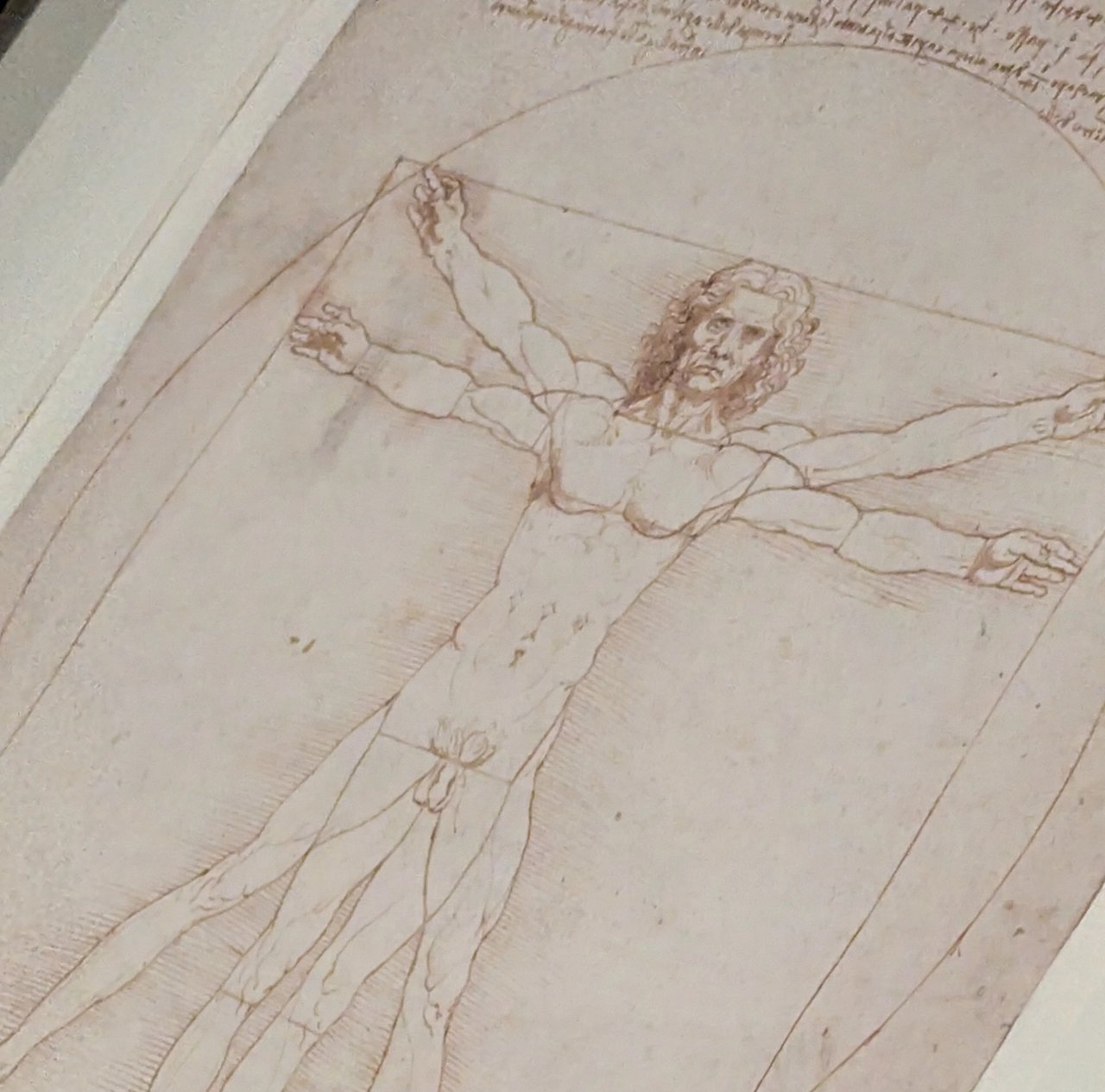
I have to be honest: I had not written a single note in a long time. After my last assignment, the days were packed — deadlines, deliverables, the usual rhythm of work that leaves no room for stepping back and putting thoughts on paper. Writing requires a certain margin, a space between doing and thinking, and that space simply was not there.
Then something changed. Not gradually — noticeably. I found myself getting more done in less time. Not by working harder or longer, but by working in a fundamentally different way. And with that shift came something I had almost forgotten the feel of: time. Time to pause. Time to look at what is actually happening around me and reflect on it. The fact that you are reading these words is itself a small proof of the change I am about to describe.
Because what gave me that time back is the same thing this article is about.
The Old Constraint: When Technology Dictated What You Could Build
For decades, building a web or mobile application meant navigating a maze of technical constraints before a single creative decision could be made. Which framework? Which language? What are the limits of the backend? Can the frontend even render this? The vision always had to bend to the toolchain.
Designers dreamed in one language; engineers translated — and in translation, something was always lost. The gap between "what I imagined" and "what we shipped" was the tax everyone paid, project after project. Technical literacy was the gatekeeper, and ideas that couldn't survive the engineering gauntlet simply died on the whiteboard.
That paradigm is ending.
The New Reality: Ideas First, Implementation Second
AI agents that support the creative development process have introduced a fundamental inversion. The starting point is no longer what can we build — it is what do we want to exist.
A well-crafted prompt, born from a clear and well-defined idea, is now the most powerful development tool available. When you articulate what you want with precision — the behavior, the feel, the user journey, the edge cases — the AI agent can generate a working artifact that is remarkably close to the vision. The bottleneck has shifted from technical execution to creative clarity.
This changes who gets to build. A product strategist with a sharp concept and the ability to describe it rigorously can produce a functional prototype without writing a single line of code. A designer who can articulate interaction patterns in plain language can see them materialize in minutes, not sprints.
The question is no longer "can we build this?" It is "can we describe this clearly enough?"
The Prompt as Blueprint
There is a discipline emerging here that deserves attention: the craft of the well-defined prompt. It is not about knowing the right keywords or tricks. It is about thinking clearly about what you want to create.
A good prompt is, in essence, a good brief. It describes intent, constraints, behavior, and context. The people who benefit most from AI-assisted development are not those who know the most about code — they are those who know the most about what they are building and why.
This is a profound shift. Conceptual rigor, user empathy, and product thinking — skills that were always valuable but never sufficient on their own — are now directly productive. They generate working software.
The Iterative Advantage: Improving the Artifact
Perhaps the most underestimated benefit lies in what happens after the first output. Traditional development cycles are slow to iterate. Changing a layout, rethinking a flow, experimenting with a different interaction model — each change carries a cost in time, coordination, and risk.
With AI-assisted creation, the artifact is fluid. You can look at the first result, identify what works and what doesn't, and refine it through conversation. Each iteration is fast, cheap, and reversible. The feedback loop shrinks from days to minutes.
This transforms experimentation from a luxury into a default mode of working. Instead of committing early to a single direction and defending it through a long build cycle, creators can explore multiple paths, compare outcomes, and converge on the best version through rapid, low-cost iteration.
The artifact is no longer a finished product delivered at the end of a pipeline. It is a living draft, shaped through dialogue between human intention and machine capability.
From Technical Limits to Creative Limits
The old paradigm had a clear villain: technical complexity. You couldn't build what you imagined because the tools were hard, the stack was fragile, and the learning curve was steep.
The new paradigm has a different challenge, and it is a better one to have. The limit is no longer what the technology allows — it is how clearly and completely you can express what you want. The constraint has moved from the machine to the mind.
This is not a trivial shift. It means that the most valuable investment a creator can make is not in learning a new framework, but in sharpening their ability to think through a product concept end to end. What is the user trying to accomplish? What should it feel like? What happens when something goes wrong? The clearer the answers, the better the output.
Bottom Line
Here is where I have landed after living inside this shift for a while.
I have more time. Not marginally more — fundamentally more. The hours I used to spend wrestling with implementation details, debugging layout quirks, or searching documentation for the right syntax are simply gone. That time is mine again.
I have more power. Ideas that would have taken weeks to prototype now take an afternoon. Concepts I would have abandoned because they were "too complex for a side project" are suddenly within reach. The distance between thinking something and building it has collapsed.
And — this one surprised me — I learn more, not less. Working with AI agents is not a passive experience. The code they suggest, the patterns they reach for, the solutions they propose — I read all of it, and I understand more with every iteration. The agent is not replacing my knowledge. It is accelerating it.
So the bottom line is simple: enjoy it. Enjoy the freedom to create without the old limits. Enjoy the fact that for the first time, the only thing standing between you and a working product is the quality of your idea.
And if you are like me, enjoy the one new frustration that comes with all this freedom — the slightly maddening realization that with nothing left to blame the tools for, you still have not found the next big idea. But at least now, when it comes, nothing will be in the way.
photo by Carlo Alberto Burato in Venice June 2025