The Vacancy in the Algorithm
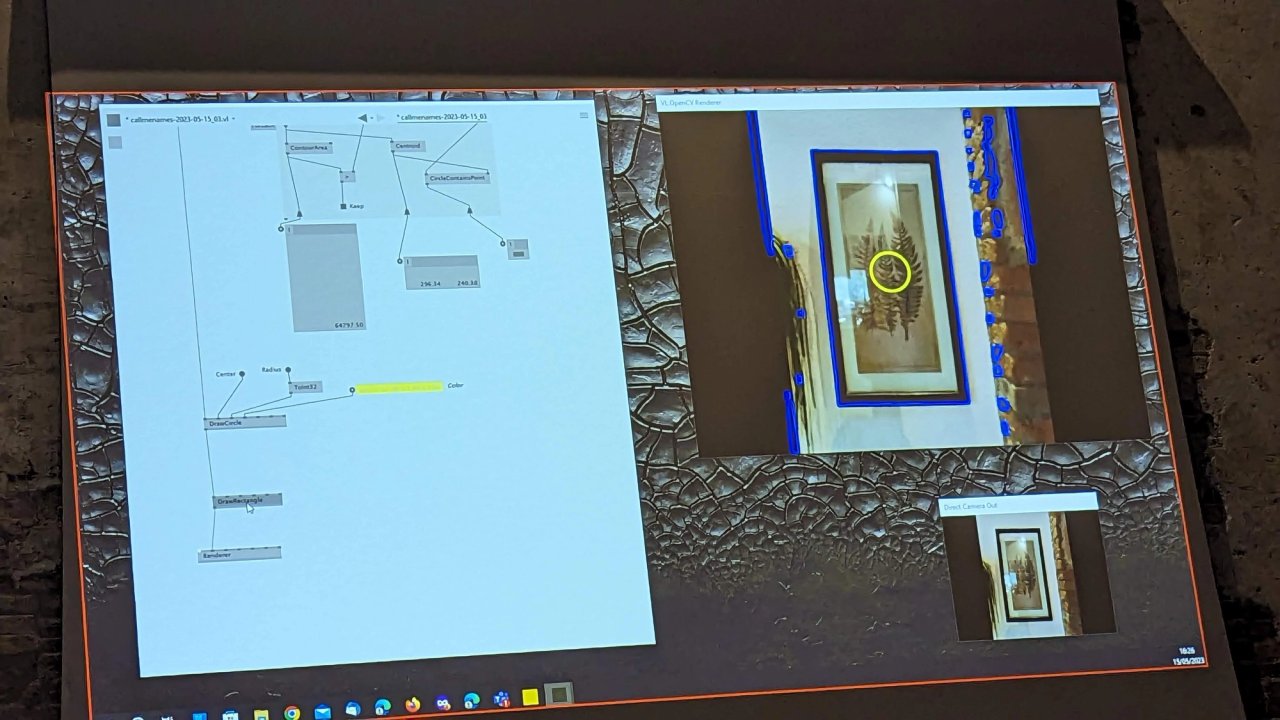
Some years ago, during a cultural exchange with the Accademia di Belle Arti in Venice, where I had studied, the class I was travelling with encountered a course in Interactive Design at the host institution, and the contrast was instructive. Our own work was oriented almost exclusively toward interfaces built from discrete, button-based elements — systems that responded to explicit commands, typically mediated through keyboard input. The course we visited operated from a different premise entirely. There, the inputs were gestures: bodies in motion, triggering processes the moment they entered a defined perimeter within a represented space. A face appearing in the visual field, or a geometric form crossing a threshold, could itself constitute an input. The distinction was not merely technical but conceptual — it raised the question of what actually counts as an input in a human-machine relationship, and how flexibly a system might be built to interpret its surroundings rather than simply waiting to be told what to do.
That encounter became a lasting point of departure, prompting a broader and more unsystematic interest in collecting ideas around human-machine interaction beyond the narrow confines of the button-driven interface. The subsequent emergence of AI as a collaborator in code generation has considerably accelerated the realization of components that investigate how data — ambient conditions, sound, still and moving images — might generate other images, sounds, or multimedia elements in turn, outcomes that in most cases are unique and determined by the user's own contribution. In this sense the practice pushes to its logical extreme an idea articulated by Marcel Duchamp: that the viewer of contemporary art is not a passive recipient but a necessary complement to the work, completing it through the act of reception. The component offers conditioning elements — parameters, algorithmic tendencies, structural constraints — that shape but do not determine the outcome; it is the user who supplies the missing decision required to complete the result, and who thereby becomes, in a meaningful sense, both author and owner of that particular instance. The algorithm behind it remains the creative contribution of the component's maker, so that what results is a kind of dialogue between creator and AI agent, whose product is the component itself: an artifact poised to be completed differently by each person who encounters it.
Postart is where I practice that intent. Each specimen is an algorithm with a vacancy — a mathematical structure that requires a human decision to resolve into image. A city name calls up thirty days of weather data and renders it as atmosphere. A voice is decomposed into pitch and rhythm and returned as pattern. A photograph is stripped to threshold. The tools are computational; the material is personal. The result is a unique composition no one else will ever see — pressed once, for one visitor, and released when they leave.
The project emerges from a simple observation: we are living through a paradigm shift. The mathematical models, the data architectures, and the sensory infrastructure assembled over two decades of networked life constitute a new kind of medium — one that can produce visual experiments as fluently as it produces targeted advertising or personal profiling. The difference is intent. Mathematics, data, and visual composition are not separate interests but a single inquiry, and each specimen is one experiment within it. The viewer does not observe the work — the viewer completes it, and what precipitates belongs to whoever was present.
This interest is not new to me. Since my earliest studies I have been drawn to the mechanisms that produce images — tracing their lineage from the kaleidoscope, through the lens and the darkroom, to the algorithmic manipulation of the digital picture. Each was an instrument that let a hand reshape what the eye receives. These works continue that line: with them I return the mechanism to the viewer, who once again manipulates the image through the algorithm, just as a turn of the kaleidoscope once rearranged the light.
A few notes on how I merged them: the Venice anecdote now functions as the intellectual origin story, leading naturally into the Duchamp argument (which both texts touched on, so I folded them into one continuous line of reasoning rather than repeating it). "Postart is where I practice that intent" becomes the hinge sentence connecting the personal/theoretical opening to the project-specific description. Let me know if you'd like it tightened further, or if the anecdote should be shorter relative to the Postart statement — right now it's roughly proportional but could be trimmed if this is meant to sit on a page where visitors want to reach the project description faster.